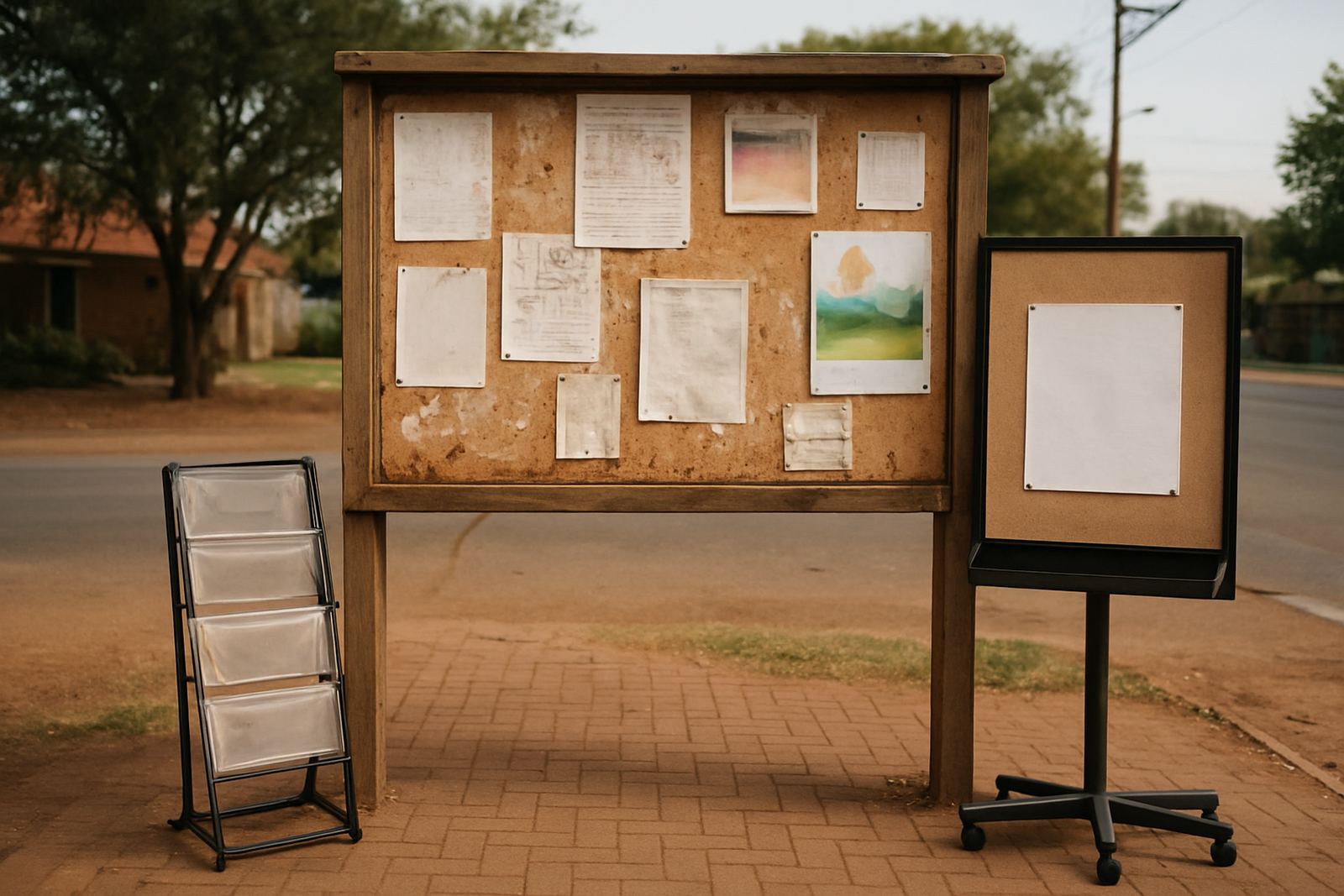

Why the right sign board matters on the West Rand
A sign is often the first thing people notice before they walk into a shop, office or service yard. In Randfontein and surrounding areas like Krugersdorp, Westonaria, Mogale City and Roodepoort, signs also have to cope with wind, dust, sun and the occasional stop-start of load-shedding that can delay production and installation planning.
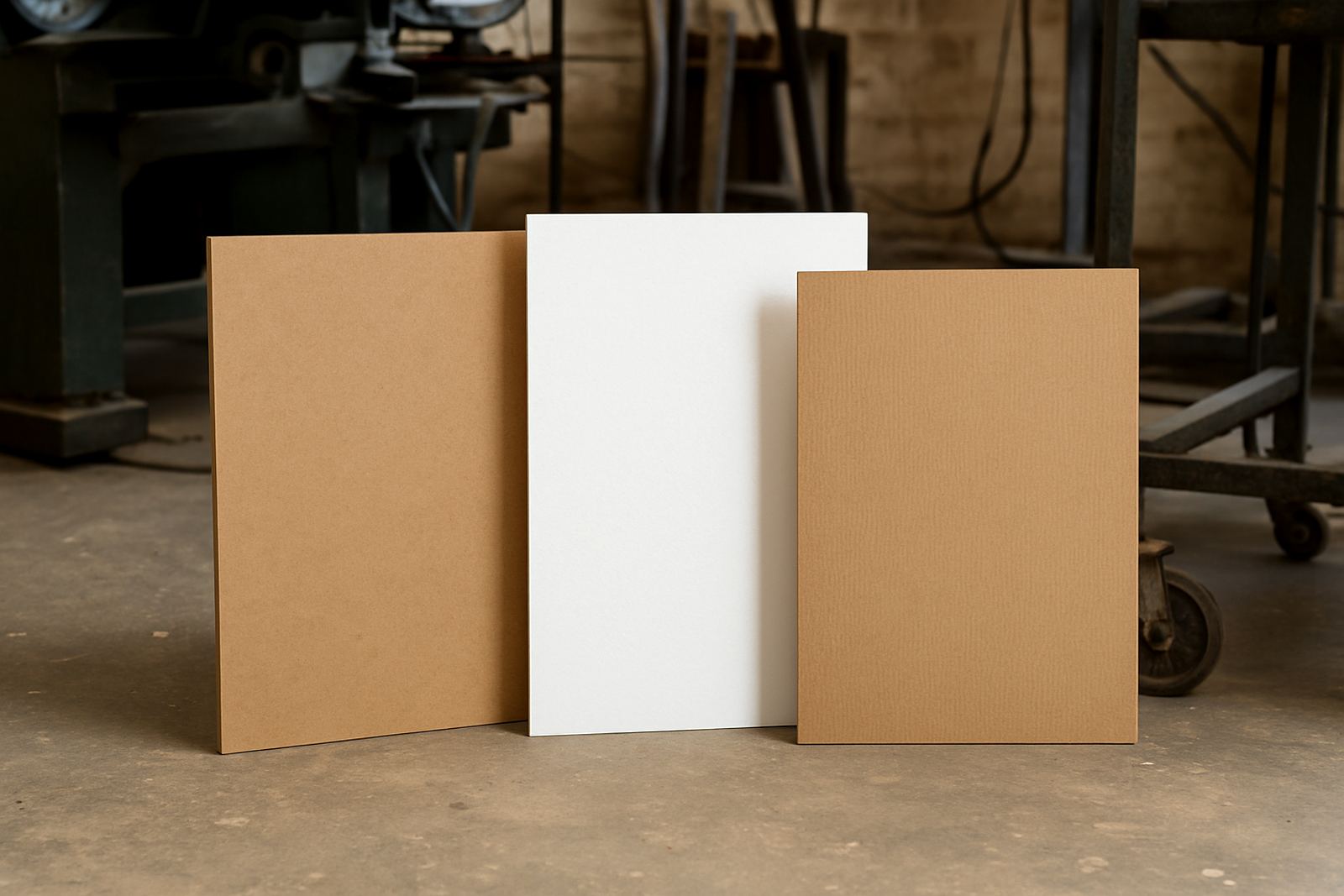
The three most common board choices for short and medium term signage are correx, foam board and rigid PVC. They are not the same thing, and they are not meant for the same job. If you match the material to the use, you get a cleaner finish, better value and fewer problems with sagging, cracking or water damage.
Think of the board first, then the print. A good layout printed on the wrong substrate will still fail sooner than it should.
Correx for short term signs, promotions and site messages
Correx is a fluted plastic sheet that is light, affordable and easy to move around. It is a common choice for estate agent boards, event signs, election notices, sale signs and temporary site messages. If you need something for a few weeks or a few months, correx is usually the practical option.
Because it is light, it can be fitted quickly to fences, walls or frames. It is also useful when you need several signs at once, such as directional boards for a market day, clinic drive or school fundraiser. In business terms, that lower upfront cost helps when the message may change soon.
- Best for temporary outdoor use
- Lightweight and easy to transport
- Cost effective for bulk orders
- Can flex slightly in strong wind if not fixed properly
Correx is not the best choice where the sign must look premium at close range for a long period. The fluted edges are visible, and the sheet can warp or crease if it is handled roughly. If you need a long lasting shop sign, it is better to move up to a stiffer board.
Foam board for clean indoor displays and presentations
Foam board gives a neat, flat finish that works well indoors. It is often used for presentations, reception displays, conference boards, photo displays, menu boards and promotional signs that stay inside. The surface looks tidy and the board takes print well, which makes it a good option when appearance matters more than weather resistance.
Its main strength is presentation. A foam board sign looks sharper than correx for indoor use, and it is easy to mount on a wall, easel or stand. For product launches, trade tables or office branding, it can make a clean impression without the weight of heavier materials.
The weakness is durability in rough conditions. Foam board can dent at the corners, and moisture can damage it quickly. In a humid coastal town it would need careful handling, and even inland it should not be left where rain, dust or direct sun can reach it. It is best used where the sign will stay protected.
- Best for indoor signage and display boards
- Light, clean and easy to mount
- Good for short term events and presentations
- Not suitable for wet or exposed locations
Rigid PVC for signs that must last longer
Rigid PVC is the stronger option when the sign needs more body and a longer service life. It is suitable for shop signs, information boards, directional signs, safety notices and exterior branding where the sign has to stay neat through sun and regular cleaning. It is heavier than correx and more durable than foam board, which makes it a practical middle ground for many businesses.
For a Randfontein CBD office, a rigid PVC sign above an entrance can hold up well because it does not flex as much and it keeps a more professional finish. It can also work for internal boards in warehouses, surgeries and schools where people may brush past the sign or wipe it down often.
Rigid PVC is usually the better value when a sign will stay up for a long time. It costs more than correx, but you avoid replacing it so soon. That matters for businesses with several branches or multiple directional signs on one property.
- Good for longer term indoor and outdoor use
- More rigid and durable than foam board
- Suitable for repeated cleaning
- Better for a permanent professional look
How to choose between the three without wasting money
The right board depends on where the sign will go, how long it must last and how much handling it will get. If it is going on a fence for a weekend promotion, correx is usually enough. If it is for a reception area or event backdrop, foam board may suit better. If it needs to stay outside and look good for months, rigid PVC is the safer choice.
It also helps to think about the size of the sign. Large signs in open areas may need extra fixing points to prevent sagging. Small signs inside a shop can often be mounted simply and still look neat. A board that is too light for its size can move in the wind, while one that is too heavy may need stronger brackets or a frame.
Material choice should also match the artwork. Fine text, small logos and colour blocks need a flat board with a stable surface. If the design includes a lot of detail, ask for print ready artwork and proofing updates before production starts so the final sign reads clearly at a distance.
A practical West Rand example from brief to board
Consider a plumbing business in Toekomsrus that needs two signs. One is a short term board for a weekend promotion at a hardware store. The other is a permanent sign for the workshop gate. The promotion board can be correx because it is light, low cost and only needed for a few days. The gate sign is better in rigid PVC because it will face sun, dust and regular contact over time.
The same idea works for a school in Mogale City or a clinic in Roodepoort. A foam board may be perfect for an indoor information board, but the external notice at the entrance should be more durable. Choosing by location is the quickest way to avoid replacing the wrong sign after the first rain or hot spell.
At @Print in Randfontein CBD, we help clients match the board to the purpose before printing starts. That saves time on reprints and keeps the finish tidy from the start.
What to ask before you place the order
Before you order a sign board, it helps to confirm a few basics. That way the job can be quoted correctly and produced without hold ups.
- Will the sign be indoors or outdoors?
- How long must it last?
- Will it be fixed to a wall, fence, stand or frame?
- Does the artwork need resizing or redraws?
- Will the surface need regular cleaning?
- Do you need one sign or several across different branches?
These details affect the material, fixing method and final cost. They also help with practical issues like weather exposure and power interruptions during production windows. If you are planning for multiple locations, it is better to order with enough time for proofing and finishing so the signs arrive ready for use.